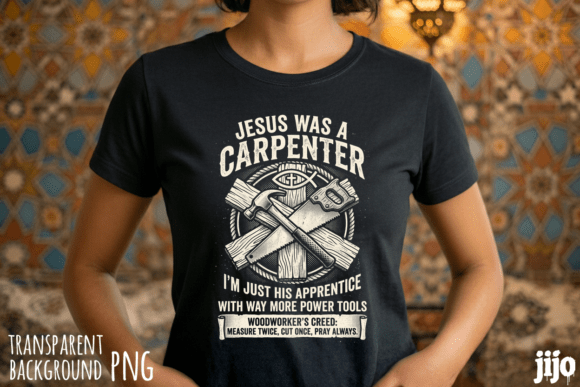
Jesus Carpenter Hammer Saw PNG
First Impressions: Warm, Handcrafted, and Thoughtfully Composed
Opening Jesus Carpenter Hammer Saw PNG feels like flipping through a well-loved sketchbook—there’s reverence in the line work, quiet dignity in the pose, and a grounded sense of craft. The composition centers Jesus as a carpenter: hands resting lightly on a workbench, hammer and saw placed with intention—not as tools of labor alone, but as symbols of vocation, care, and quiet strength. It’s not overly ornate, nor is it minimal to the point of abstraction. That balance makes it instantly adaptable for embroidery: clean outlines support satin stitch definition, open negative space allows fill stitch breathing room, and the moderate scale fits comfortably within standard hoops without sacrificing legibility.
A Real Project Test: Embroidering a Linen Kitchen Towel for a Boutique Gift Line
I recently used Jesus Carpenter Hammer Saw PNG on a natural linen tea towel—part of a small batch for a local faith-based boutique. The goal was warmth, authenticity, and heirloom quality—not religious kitsch. On fabric, the design held up beautifully: the hammer’s handle read clearly in satin stitch, the saw’s teeth stayed distinct without overcrowding, and the gentle curve of the carpenter’s posture translated into soft, confident stitching. Customers responded to the *humanity* of it—the lack of halos or overt iconography made it feel approachable, especially for homes where faith is lived quietly through daily work. That’s the quiet power of this design: it invites reflection without demanding attention.
Where It Shines (and Why)
- Custom apparel: Works exceptionally well on crewneck sweatshirts and relaxed-fit tees—especially in earthy thread palettes (olive, charcoal, oat, deep navy). The vertical orientation anchors the chest area without overwhelming.
- Embroidered patch: Clean outer edge and balanced weight make it ideal for iron-on or sew-on patches on denim jackets, aprons, or tote bags. No floating elements or fragile filigree to snag.
- Baby embroidery: Gentle theme, no sharp angles or dense clusters—ideal for onesies or burp cloths when stitched with ultra-soft cotton thread and light stabilizer.
- Holiday embroidery & personalized gifts: Fits naturally into Advent collections, baptismal gifts, or “first toolbox” keepsakes. Its timelessness avoids seasonal datedness.
- Small shop product: Reads well in boutique photography—clear silhouette, strong visual rhythm, and meaningful narrative help it stand out among generic T-Shirt Designs.
Where to Proceed with Intention
This isn’t a one-size-fits-all embroidery file—and that’s a good thing. Its thoughtful construction means it asks for thoughtful application:
- Small hoop sizes: Avoid sub-4” hoops. The saw and hammer need breathing room; compressing them risks losing definition in satin-stitched tool handles.
- Textured or stretchy fabric: On terry cloth towels or lightweight jersey tees, use cutaway + tear-away combo stabilizer. The open areas between tools can shift if fabric moves mid-stitch.
- Dark fabric: Test thread contrast early. Cream or ecru thread reads softly on black; medium taupe or heather gray gives more presence without harshness.
- Curved surfaces: Caps and beanies require careful digitizing adjustments—this PNG will need re-digitizing (not just resizing) for clean cap embroidery. Don’t attempt direct transfer to curved hoops.
- Frequent-wash items: Reinforce backstitching at key anchor points (base of saw, hammer head junction) if using on kitchen towels or baby bibs.
Design Integrity Meets Customer Trust
What sets Jesus Carpenter Hammer Saw PNG apart isn’t novelty—it’s coherence. Every element supports the same quiet, capable mood: the slightly lowered gaze, the steady hands, the uncluttered workspace. That consistency builds trust. When a customer sees this on a handmade product—say, an embroidered pillow cover for a new nursery—they don’t just see a design; they sense intention behind the maker’s choice. That translates directly to perceived value, repeat orders, and word-of-mouth referrals. For Etsy sellers and craft fair vendors, that emotional resonance is often the difference between a one-time sale and a loyal buyer.
Practical Designer Notes Before You Stitch
- Always test Jesus Carpenter Hammer Saw PNG on scrap fabric matching your final substrate—linen behaves differently than cotton poplin, which behaves differently than fleece.
- Check stitch density visually: look for overfilled areas near the saw’s base or hammer head. If your machine hesitates or threads break, reduce density slightly in those zones.
- Review small details under magnification—especially the join between wrist and tool handle. If edges blur at 3x zoom, adjust underlay or slow stitch speed.
- Mock it up in both light and dark backgrounds. Does the composition hold weight on black? Does it disappear on cream? Adjust thread selection accordingly.
- Use proper stabilizer—not just for hold, but for surface consistency. A medium-weight cutaway prevents puckering on woven fabrics; a lightweight tear-away works for stable knits.
- Confirm licensing before selling finished products or digital embroidery files. This is essential for commercial embroidery, Etsy listings, or craft business resale.
- Try a black-and-white printable mockup first. If the design reads clearly without color, you’ve got strong foundational composition—a hallmark of professional-grade design assets.
Final Thought: A Design That Serves the Maker and the Message
Jesus Carpenter Hammer Saw PNG doesn’t shout. It steadies. It fits naturally into projects where craftsmanship, quiet faith, and handmade integrity matter—whether you’re embroidering a gift for a carpenter friend, launching a small shop collection centered on vocation, or creating custom apparel for a church outreach team. It’s not flashy—but then, neither is laying a true foundation. Use it with care, test with honesty, and let its grounded presence do the speaking. That’s how great T-Shirt Designs—and great embroidery—earn their place in people’s lives.